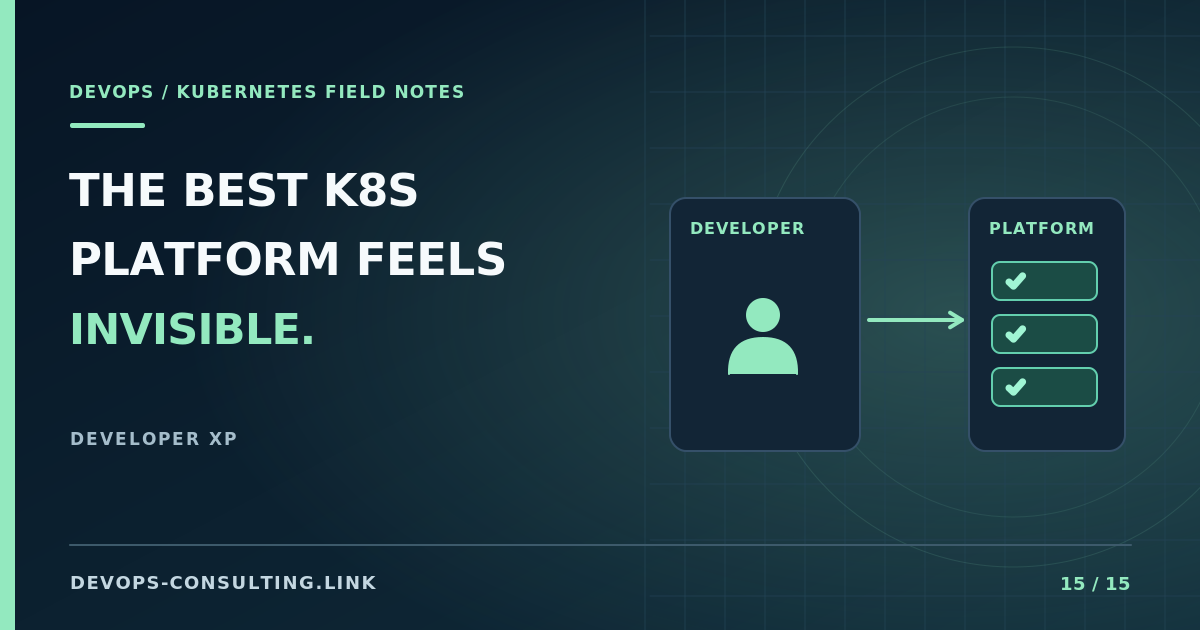
If deploying a small feature requires understanding Helm templating, ingress annotations, cluster credentials, node selectors, and three different dashboards, your platform may be exposing too much machinery.
Developer self-service should remove unnecessary decisions, not simply move infrastructure work onto application teams.
Self-service is not "here's your kubeconfig"
Giving every team direct cluster access may increase flexibility, but it doesn't automatically improve delivery. A developer still needs to know which settings are safe, which environment to deploy into, and what to do when the rollout stalls.
A platform should make the common path clear, repeatable, secure, and observable.
What a useful golden path looks like
For a standard HTTP service, an internal platform might provide:
- A service template with sensible build and health-check defaults.
- A CI/CD workflow with tests, image provenance, and deployment controls.
- A predictable way to provision configuration and secrets.
- Automatic TLS, workload identity, resource defaults, and policy checks.
- Deployment status, logs, traces, and rollback instructions in one discoverable location.
Developers should still understand their application's behavior and reliability obligations. They just shouldn't have to rebuild platform conventions for every repository.
Don't build an internal developer portal nobody asked for
It's tempting to install a large platform stack before discovering where developers actually lose time. Start smaller. Interview teams about their last five deployments. Note repeated manual steps, confusing failures, permission bottlenecks, and workarounds.
Choose the most common painful path and automate it. Measure whether it helped before adding another abstraction.
A useful platform metric might be time from merged change to verified production release, frequency of failed changes, or the time it takes a new engineer to deploy a first service. Count support tickets and on-call escalations too.
Abstraction has a limit
If a deployment is unhealthy, developers must still be able to discover why. Hiding Kubernetes behind a "Deploy" button without exposing meaningful diagnostics creates a different kind of ticket queue.
The best experience is simple by default, transparent when needed, and safe by design.
The question I'd ask before buying more tools
Can an engineer who joined last week deploy and troubleshoot a standard service without asking a platform engineer to interpret every step?
If the answer is no, the next improvement may be a runbook, a reusable template, or an access change—not another complex platform product.
Discussion: Should developers learn Kubernetes deeply, or should platform teams deliberately hide most of it?
If your platform has become a delivery bottleneck, Kubernetes consulting can help define practical self-service workflows. Request a discovery call.